航空/國防 · 個股深度
Lockheed Martin (LMT) 深度分析|2026年5月8日
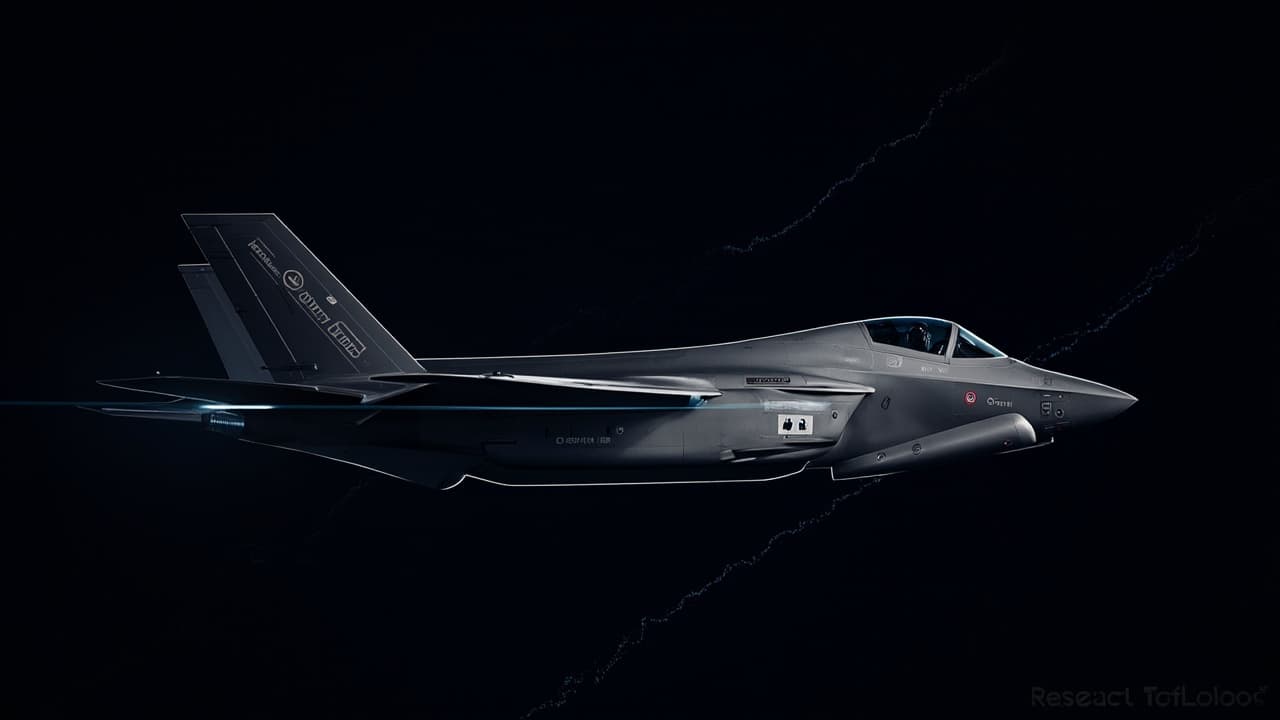
Lockheed Martin (LMT) — Premium Stock Analysis
Date: May 8, 2026 | Ticker: NYSE: LMT | Sector: Aerospace & Defense---
EXECUTIVE SUMMARY
Lockheed Martin remains the world's largest defense contractor with an unmatched backlog position and deep integration into U.S. and allied national security architecture. The stock has delivered approximately +30% year-to-date in 2026, driven by geopolitical tailwinds from the ongoing Middle East conflict, and trades at a modest premium to sector medians. Q1 2026 results were mixed — EPS missed consensus by ~$0.30 while revenue was roughly in-line — but management reaffirmed full-year guidance centered on ~5% revenue growth and ~25% operating profit growth. With a record backlog now normalizing off peak levels and several structural headwinds persisting, LMT is a Hold for new positions but remains a core holding for investors seeking defense sector exposure with durable cash generation and a 2%+ yield.
---
1. BUSINESS QUALITY ANALYSIS
Company Overview & Moat Assessment
Lockheed Martin operates four reportable segments:
| Segment | Q1 2026 Sales | YoY Change | Key Programs |
|---|---|---|---|
| --------- | ------------- | ------------ | ------------- |
| **Aeronautics** | $6.95B | -1% | F-35 Lightning II, F-16, C-130J |
| **Missiles and Fire Control (MFC)** | $3.65B | +8% | PAC-3, THAAD, JASSM, LRASM, PrSM |
| **Rotary and Mission Systems (RMS)** | $3.99B | -8% | Sikorsky helicopters, Aegis, radar |
| **Space** | $3.43B | +7% | NGI, FBM, Orion, satellite systems |
Secondary Moat: Missile Defense Architecture MFC's PAC-3 and THAAD interceptors sit at the center of U.S. and allied missile defense architectures, a priority that has intensified amid ongoing Middle East hostilities. The Patriot (PAC-3) and Next Generation Interceptor (NGI) programs provide multi-decade revenue visibility in a category where switching costs for the government are effectively infinite.
Q1 2026 Financial Performance
| Metric | Q1 2026 | Q1 2025 | Change |
|---|---|---|---|
| -------- | --------- | --------- | -------- |
| Revenue | $18.02B | $18.0B | Flat |
| Net Earnings | $1.49B | $1.71B | -13% |
| Diluted EPS | $6.44 | $7.28 | -12% |
| Operating Cash Flow | $220M | $1.41B | -84% |
| Free Cash Flow | $(291)M | $955M | -130% |
Segment-Level Operating Profitability:
| Segment | Q1 Margin | Q1 2025 Margin | Change |
|---|---|---|---|
| --------- | ----------- | ---------------- | -------- |
| Aeronautics | 8.9% | 10.2% | -130 bps |
| MFC | 13.7% | 13.8% | -10 bps |
| RMS | 10.6% | 12.0% | -140 bps |
| Space | 8.2% | 11.8% | -360 bps |
Balance Sheet & Cash Allocation
Lockheed retired $1.0B in scheduled debt in Q1 and continued its capital return program. With 23 consecutive years of dividend increases, LMT is on the cusp of Dividend Aristocrat status. The balance sheet remains investment grade and adequately liquid.
---
2. NEAR-TERM CATALYSTS & RISKS (6–18 MONTH HORIZON)
Bull Case Catalysts
1. Defense Budget Expansion President Trump's proposed defense budget of $1.5 trillion by FY2027 (vs. $901B in FY2026) represents a structural step-change in U.S. defense spending. Lockheed is disproportionately positioned to capture contracts across all four segments — fighter jets, missile defense, naval systems, and space assets. A budget of this magnitude would likely accelerate F-35 Lot 20 & 21 procurement, Patriot interceptors, and next-generation interceptor programs.
2. Geopolitical Demand for Precision Munitions The ongoing Middle East conflict has demonstrated acute demand for Lockheed's precision-guided munitions (JASSM, LRASM, PrSM, PAC-3). MFC segment posted +8% sales growth in Q1, driven by ~$190M from PAC-3 programs and ~$75M from tactical/strike missiles. The conflict has also validated the F-35's operational role, with U.S. and Israeli F-35s conducting sustained operations — reinforcing the program's strategic importance and export potential.
3. Missiles & Fire Control Double-Digit Growth MFC is the highest-margin segment at ~13.7% and is the primary beneficiary of the global munitions ramp. Truist Securities estimates this segment could generate double-digit growth over the coming year given expanding global orders and capacity investments. The multiyear framework agreements signed with the Department of War to increase munitions production provide long-term visibility.
4. Space Domain Acceleration The Space segment grew 7% in Q1 on NGI and FBM (Fabrication & Missile Production) programs. Growing missile warning satellite orders and U.S. Space Force priorities provide a multi-year tailwind.
5. AI & Autonomy Differentiation Lockheed's VISTA AI-controlled training jet executed 17+ hours of complex flight maneuvers without human intervention. Machine learning-driven predictive maintenance reduces Pentagon fleet downtime costs — a meaningful value-add that reinforces the F-35 sustainment moat. The Collaborative Combat Aircraft (CCA) program positions Lockheed to build autonomous drone fleets that accompany manned platforms.
Bear Case Risks
1. F-35 Delivery Volatility F-35 deliveries fell to 32 aircraft in Q1 2026 vs. 47 in Q1 2025 — a 32% year-over-year decline. While this partly reflects transition to new production lots, it creates quarterly revenue uncertainty. The F-35 remains the single largest revenue driver; persistent delivery disruptions would materially impact top-line results.
2. Program Cost Pressures on Fixed-Price Contracts Q1 saw unfavorable profit adjustments on F-16 ($125M), C-130 ($55M), and CH-53K/Seahawk ($50M). Lockheed operates predominantly on fixed-price contracts where cost overruns flow directly to the bottom line. A sustained trend of production inefficiencies would pressure margins across segments.
3. Backlog Normalization Total backlog declined from a record $193.6B to $186.4B quarter-over-quarter. While still historically elevated, the sequential decrease signals that large-ticket awards may be timing-dependent. Investors should monitor book-to-bill ratios carefully.
4. Geopolitical De-escalation Risk A ceasefire in the Middle East conflict — even a partial one — could reduce the urgency premium embedded in defense stocks. LMT has historically underperformed the S&P 500 during periods of easing geopolitical tension (Ciarmoli at Truist notes LMT has gained less than 11% over the past year vs. S&P 500's 17% gain). Ceasefire talks emerging represent a meaningful sentiment headwind.
5. Rotational Exit from Defense As a "safe haven" trade, LMT is vulnerable to rotation out of defense stocks when broader market conditions improve or risk-off sentiment reverses. The stock's 30% YTD gain may have already priced in a meaningful portion of the geopolitical premium.
---
3. VALUATION & MARKET CONTEXT
Valuation Metrics
| Metric | LMT | Sector Median |
|---|---|---|
| -------- | ----- | --------------- |
| Forward P/E | ~20.98x | ~19.21x |
| Price-to-Sales | ~1.83x | ~1.75x |
| Price-to-Cash Flow | ~16.31x | ~15.07x |
Analyst Consensus
| Metric | Value |
|---|---|
| -------- | ------- |
| Consensus Rating | **Moderate Buy / Hold** |
| Analyst Count | 21–24 covering |
| Strong Buy | 7 |
| Hold | 16 |
| Strong Sell | 1 |
| Mean Price Target | $602–$678 |
| Upside to Mean | ~17–32% |
| High Target | $695–$808 |
| Low Target | $430–$522 |
Price Performance Context
---
4. INVESTMENT THESIS & FORWARD OUTLOOK
Investment Conclusion: HOLD
Lockheed Martin is a high-quality, franchise-quality defense business with a structural moat, 23-year dividend growth streak, and meaningful exposure to the defense budget expansion cycle. The Q1 miss and cash flow compression are concerning in the short term but appear manageable given the reaffirmed full-year guidance. Backlog quality remains strong at $186B, and the munitions ramp in MFC is a genuine multi-year growth driver.
However, after a 30% YTD run, the stock has likely captured much of the geopolitical premium available in the current environment. The gap between "Hold" and "Buy" cases narrows considerably from current levels (~21x forward P/E vs. 5-year average of ~18x). Investors who own the stock from lower levels can reasonably hold; new position builders should wait for a pullback toward the $450–$480 range or evidence of accelerated F-35 lot awards to improve risk-adjusted entry points.
2026 Financial Outlook (Reaffirmed)
| Metric | Guidance Range | Implied Midpoint YoY Growth |
|---|---|---|
| -------- | --------------- | --------------------------- |
| Revenue | $77.5B–$80.0B | ~5% |
| Business Segment Op. Profit | $8.425B–$8.675B | ~25% |
| Diluted EPS | $29.35–$30.25 | ~39% |
| Cash from Operations | $9.15B–$9.45B | ~6% |
| Free Cash Flow | $6.5B–$6.8B | ~0–3% (vs. $6.9B in 2025) |
| Capital Expenditures | $2.5B–$2.8B | — |
Key Debates for the Next 6 Months
1. Will F-35 deliveries recover? 32 aircraft in Q1 is well below the run rate needed to hit full-year guidance. H2 must show meaningful acceleration. 2. Can MFC sustain 8%+ growth? The munitions ramp is real, but year-over-year comps get harder in H2. 3. Does the defense budget expand as proposed? The $1.5T budget is a proposal — appropriations battles could water down actual spending levels. 4. What is the arc of the Middle East conflict? A ceasefire would remove a meaningful sentiment tailwind; sustained hostilities extend the premium.
---
ANALYST RATINGS SNAPSHOT
| Firm | Rating | Price Target | Date |
|---|---|---|---|
| ------ | -------- | ------------- | ------ |
| Truist | Upgrade to Buy | $695 | Jan 2026 |
| RBC | Sector Perform | $650 | Jan 2026 |
| JPMorgan | — | $605 | Jan 2026 |
| Deutsche Bank | — | — | — |
| Morgan Stanley | — | — | — |
| **Mean Target** | **Hold** | **$602–$678** | — |
---
RISK/REWARD PROFILE
| Scenario | Probability | 12-Month Price Target | Upside/Downside |
|---|---|---|---|
| ---------- | ------------ | ----------------------- | ----------------- |
| **Base Case** | 45% | $620–$660 | +10–20% |
| **Bull Case** | 25% | $700–$750 | +20–30% |
| **Bear Case** | 30% | $420–$480 | -15–20% |
---
This article is for informational and analytical purposes only. It does not constitute investment advice. Lockheed Martin is subject to the usual risks associated with government contracting, geopolitical exposure, program execution, and regulatory change. Past performance is not indicative of future results. Verify all data against primary sources before making investment decisions.
Sources: Lockheed Martin Q1 2026 earnings release (April 23, 2026), Q4 2025 full-year results, Truist Securities research, RBC Capital Markets research, Barchart, MarketBeat, Seeking Alpha, Reuters, Intellectia.ai, Stocksguide.com, TickerNerd, StockAnalysis.com. Data as of May 8, 2026.
此文章為 PREMIUM 會員專屬內容
訂閱 PREMIUM — HKD $188/月